
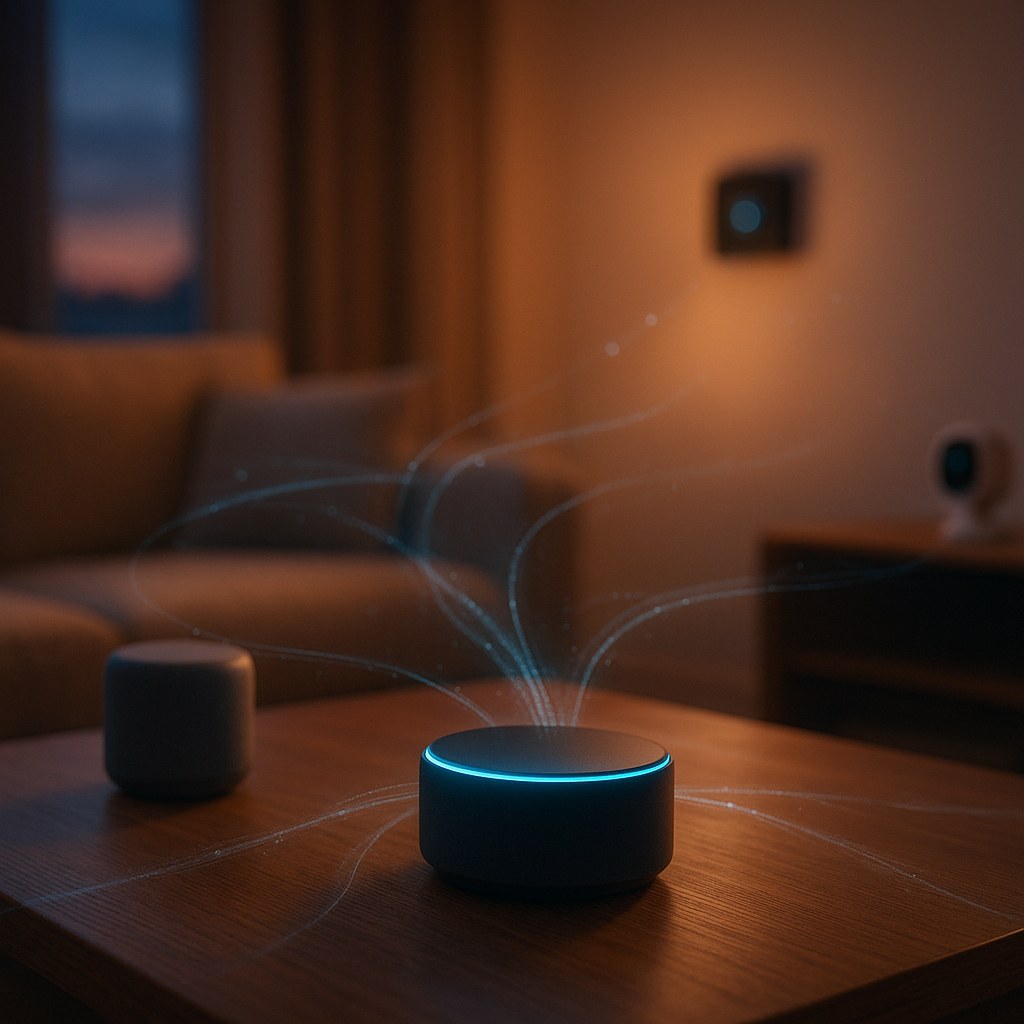
If you’ve ever asked your smart speaker a question and waited several seconds for a response, you’ve experienced the fundamental limitation of cloud-dependent smart home devices. That awkward delay isn’t just annoying—it reveals how most connected gadgets send your voice commands, video feeds, and sensor data thousands of miles to distant data centers before responding.
Edge computing is changing that equation entirely. By processing data directly on your devices or nearby hubs instead of relying solely on the cloud, this technology is making smart homes faster, more private, and remarkably more reliable. Major manufacturers are rapidly adopting this approach, with Gartner predicting that 75% of enterprise-generated data will be processed at the edge by 2025, and consumer smart home devices are following the same trajectory.
This shift represents more than just technical optimization—it’s a fundamental reimagining of how intelligent our homes can actually become.
What Exactly Is Edge Computing in Smart Homes?
Traditional smart home architecture works like this: your security camera captures motion, sends footage to a cloud server, waits for analysis, then receives instructions back. Each step introduces latency, consumes bandwidth, and creates potential privacy vulnerabilities.
Edge computing flips this model by placing computational power directly where data originates. Your doorbell camera now contains enough processing capability to distinguish between a delivery person and a stray cat without contacting any external server. Your thermostat learns your schedule using local machine learning algorithms rather than uploading your daily patterns to corporate databases.
This doesn’t mean the cloud disappears entirely. Instead, edge computing creates a hybrid approach where time-sensitive or privacy-critical decisions happen locally, while the cloud handles long-term storage and complex analytics that benefit from aggregated data.
The Technical Foundation
Modern edge-enabled devices pack surprising computational muscle. Today’s smart home processors can perform billions of operations per second while consuming minimal power—capabilities that would have required room-sized computers just decades ago.
These systems typically employ specialized chips designed for specific tasks: neural processing units for AI inference, digital signal processors for audio analysis, and dedicated security modules for encryption. This hardware specialization allows even battery-powered devices to perform sophisticated computations without draining their power reserves.
Why Traditional Cloud-Based Smart Homes Fall Short
The limitations of cloud-dependent architecture become apparent the moment your internet connection hiccups. Suddenly, your “smart” home becomes remarkably dumb—lights won’t respond, security systems go dark, and voice assistants offer nothing but apologetic error messages.
But connectivity issues represent just one problem. The constant data transmission required by cloud processing creates several additional challenges:
- Latency delays: Round-trip communication to distant servers typically adds 100-500 milliseconds, making real-time applications like video doorbells feel sluggish
- Bandwidth consumption: A single 4K security camera can consume 2-4 GB of data daily, straining home internet connections and triggering data cap overages
- Privacy exposure: Every piece of information transmitted creates potential interception points and expands the attack surface for malicious actors
- Service dependency: When manufacturers discontinue cloud services—as happened with numerous smart home platforms—devices can lose core functionality overnight
- Ongoing costs: Cloud storage and processing fees create subscription fatigue, with some households paying $30-50 monthly just to maintain basic smart home functionality
The Transformative Benefits of Edge Processing
Edge computing addresses these pain points directly, delivering improvements that users notice immediately in daily interactions with their devices.
Dramatic Speed Improvements
Processing data locally eliminates network latency almost entirely. Edge-enabled security systems can trigger alarms within 10-20 milliseconds of detecting intrusion—fast enough to capture intruders before they’ve fully entered a room. Smart lighting responds instantly to presence detection without the frustrating delays that made earlier motion-activated lights feel unresponsive.
This speed matters most in safety applications. Medical alert systems can detect falls and summon help without waiting for cloud confirmation. Fire detection systems analyze smoke patterns locally, potentially saving crucial seconds during emergencies.
Enhanced Privacy and Security
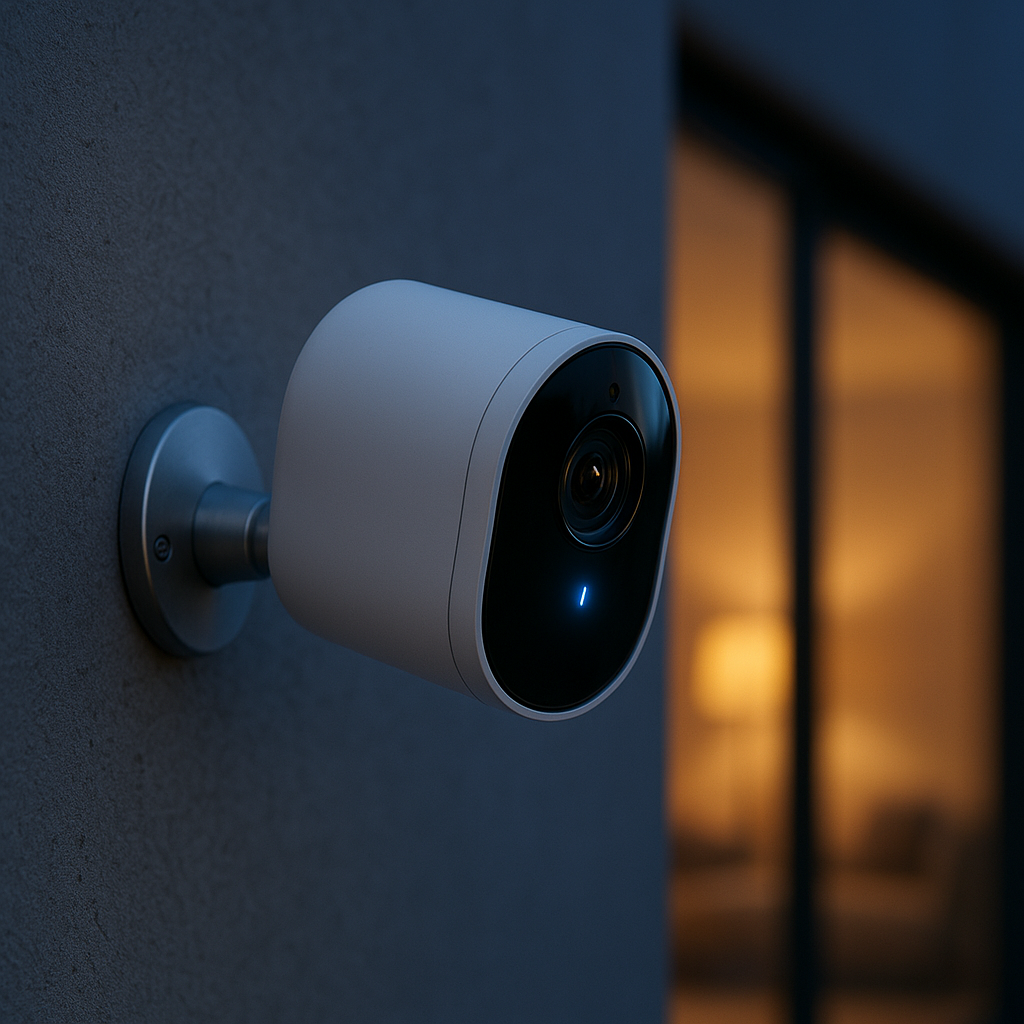
When your data never leaves your home, it can’t be intercepted in transit or breached from remote servers. Edge computing keeps sensitive information—video footage of your family, voice recordings, daily routine patterns—stored and processed within your physical control.
This architecture also reduces vulnerability to large-scale data breaches. Even if a manufacturer’s servers suffer compromise, edge-processed data remains protected because it never reached those servers in the first place. For security cameras, door locks, and other sensitive devices, this localized approach provides peace of mind that cloud-dependent alternatives simply cannot match.
Reliable Operation During Outages
Edge-enabled smart homes maintain core functionality even when internet service fails. Your security system continues monitoring and recording locally. Automated lighting schedules keep running. Voice assistants can still control connected devices within the home network.
This resilience proves particularly valuable in regions with unreliable connectivity or during natural disasters when communication infrastructure suffers damage. Edge computing ensures your home remains intelligent when you need it most.
Reduced Bandwidth and Storage Costs
Processing data locally dramatically reduces transmission volumes. Instead of streaming continuous video to the cloud, edge cameras analyze footage locally and only upload clips when meaningful events occur. This approach can reduce bandwidth consumption by 90% or more while extending cloud storage retention periods.
For households with multiple cameras, these savings become substantial. A four-camera system might consume less bandwidth than a single traditional cloud camera while providing superior coverage and faster alerts.
Real-World Applications Transforming Daily Life
Edge computing’s impact extends across every category of smart home technology, enabling capabilities that simply weren’t feasible with cloud-dependent approaches.
Intelligent Security Systems
Modern edge-enabled cameras don’t just record—they understand what they’re seeing. On-device AI can distinguish between people, vehicles, animals, and packages with 95%+ accuracy, dramatically reducing false alerts. Some systems recognize familiar faces and adjust responses accordingly, greeting family members while flagging unknown visitors.
These systems also enable sophisticated features like package detection, loitering alerts, and unusual activity recognition without sending continuous video feeds to external servers. Your footage stays private while you gain genuinely useful intelligence about activity around your home.
Advanced Voice Assistants
Voice control has evolved beyond simple command recognition. Edge-powered assistants now process natural language locally, understanding context and follow-up questions without cloud round-trips. This enables conversational interactions that feel genuinely responsive rather than robotic.
Local processing also allows voice assistants to function in areas with poor connectivity—rural homes, basements, garages—where cloud-dependent alternatives would fail entirely. Privacy-conscious users appreciate that their conversations remain within their walls rather than being transmitted for remote processing.
Proactive Home Automation
Edge computing enables truly predictive automation rather than simple scheduled routines. Local AI systems learn your patterns and adjust environments proactively: pre-cooling rooms before you arrive home, adjusting lighting based on natural light levels and occupancy, optimizing energy consumption based on real-time utility pricing.
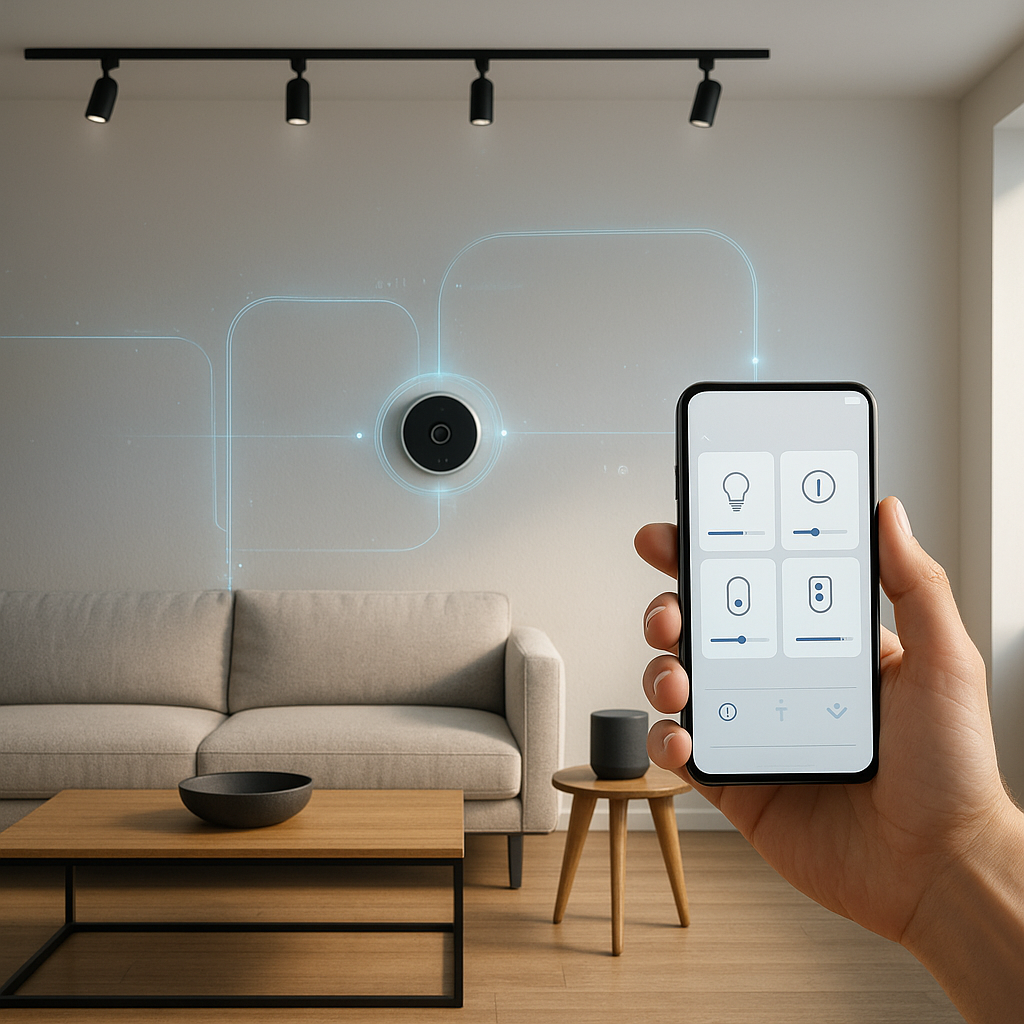
These systems improve continuously without requiring cloud updates. The longer they operate, the better they understand your preferences—learning happens locally, keeping your behavioral patterns private while delivering increasingly personalized experiences.
What to Look for When Choosing Edge-Enabled Devices
Not all smart home products marketed as “smart” actually utilize edge computing effectively. When evaluating devices, consider these factors:
- Processing specifications: Look for dedicated AI chips or neural processing units, not just general-purpose processors
- Local storage capacity: Sufficient onboard storage for video, audio, or sensor data without mandatory cloud subscriptions
- Offline functionality: Clear documentation of which features work without internet connectivity
- Open standards support: Compatibility with protocols like Matter, Thread, or Zigbee that enable local device communication
- Update policies: Manufacturers committed to long-term firmware updates that improve local capabilities over time
Be cautious of products that emphasize “AI-powered” features but require constant cloud connectivity. True edge computing should reduce, not increase, dependence on external services.
The Road Ahead for Edge Computing in Smart Homes
The trajectory is clear: edge processing will become the default architecture for smart home devices rather than a premium feature. Several developments are accelerating this transition.
The Matter standard, backed by Apple, Google, Amazon, and hundreds of other manufacturers, prioritizes local device communication and control. As Matter adoption expands, expect more devices to work together locally regardless of brand, without requiring cloud intermediaries.
Advances in semiconductor technology continue making edge processing more accessible. Chips that once required active cooling and substantial power now operate efficiently in compact, battery-powered form factors. This enables edge AI in devices as small as door sensors and light switches.
Perhaps most significantly, consumer awareness of privacy issues is driving demand for local processing. As users become more sophisticated about data collection practices, manufacturers respond by emphasizing on-device intelligence as a competitive advantage.
Conclusion
Edge computing represents a fundamental maturation of smart home technology. By processing data where it’s generated rather than transmitting everything to distant servers, this approach delivers the responsiveness, privacy, and reliability that users actually want from connected devices.
The benefits extend across every aspect of smart home functionality: security systems that respond instantly without compromising privacy, voice assistants that understand context locally, and automation that adapts to your life without broadcasting your habits to corporate servers.
As processing power continues increasing while costs decrease, edge computing will enable capabilities we haven’t yet imagined—truly intelligent homes that anticipate needs, protect privacy, and operate reliably regardless of external connectivity. The smart home of the future isn’t just connected; it’s genuinely intelligent, and that intelligence lives where it matters most: right at home.